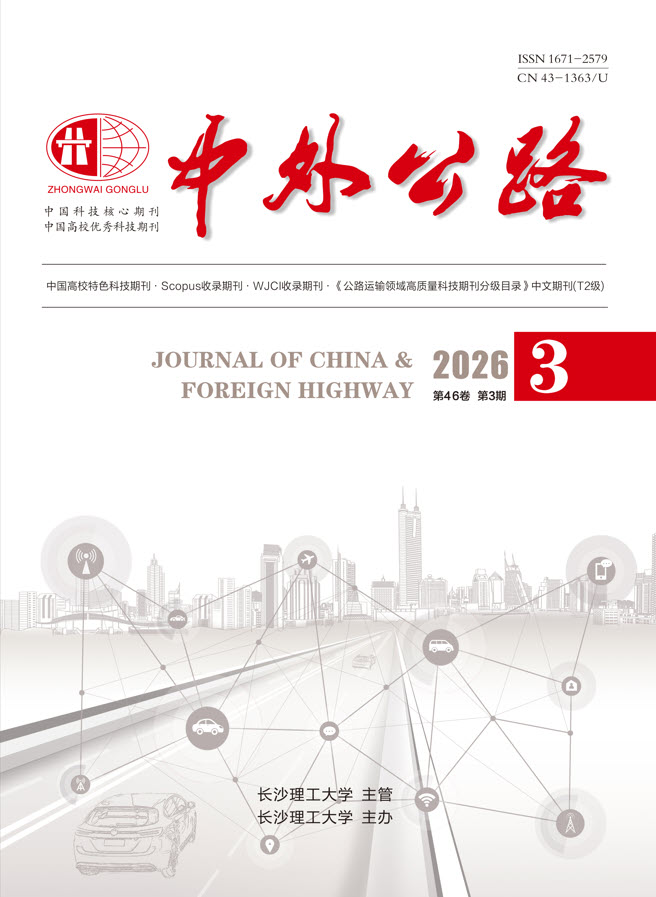
Journal of China & Foreign Highway is an open access academic journal, which comprehensively reports up-to-date progress of subgrade engineering, pavement structure and materials, bridge engineering and tunnel engineering, smart road and intelligent transportation, road maintenance and environmental protection, and foreign highway. It has been indexed by various databases such as the Key Magazine of China Technology, Research Center for Chinese Science Evaluation (RCCSE), China National Knowledge Infrastructure (CNKI), WJCI, Scopus, DOAJ, COAJ, ICI World of Journals, ICI Journals Master List, CA, Ulrichsweb, EuroPub, etc.
See the Aims and Scope for a complete coverage of the journal.
Current Issue: Volume 45, Issue 6 (2025)
Subgrade Engineering
Shaking Table Test and Numerical Simulation of Seismic Response Characteristics of Rock Slope with Muddy Interlayer
DUAN Chenggang, FANG Yanlin, TIAN Yeqing, and ZHOU Zhijun
Date posted: 12-24-2025
DOI: https://doi.org/10.14048/j.issn.1671-2579.2025.06.001
In order to study the seismic macroscopic failure process and dynamic response characteristics of rock slope with muddy interlayer and reveal the influence of muddy interlayer on slope stability,a similar slope model with concave and convex slope types was designed,and shaking table test was carried out;finite element analysis was used for numerical modeling analysis,and the results obtained by the two models were compared.The results show that:① The macroscopic deformation and failure process of the model slope is divided into three stages.Muddy interlayer dislocates,and cracks occur;mud interlayer slips,and cracks expand;slope collapses;② The seismic load has a decisive influence on the stability of the slope.With the increase in the seismic acceleration amplitude,the slope damage becomes more serious;③ Muddy interlayer is the weak part of the slope.Under the influence of the earthquake,tension cracks first appear,which is a key factor in triggering the instability of the slope;④ The seismic acceleration response characteristics of the two slopes are as follows:with the increase in seismic load,the peak ground-motion acceleration (PGA ) amplification coefficient first significantly increases and then slowly decreases.The curve trend of the PGA amplification coefficient of the two slopes is basically the same.The values near the third interlayer and at the slope shoulder are significantly higher than other measurement points.The PGA amplification factor of the concave slope is slightly larger than that of the convex slope,and the trend of the broken line is more tortuous,showing a more complicated amplification effect;⑤ Numerical simulation results show that when the seismic acceleration amplitude reaches 0.6g,the slope undergoes instability and failure.The failure modes of concave and convex slopes are slightly different.The failure mode of concave slopes is as follows:Slope shoulder collapse,with sliding failure near the point of gradient change.The failure mode of a convex slope is mainly the line of gradient change failure.Overall,the seismic stability of a convex slope is slightly better than that of a concave slope.
Numerical Simulation Analysis on Support Performance of Inclined-Vertical Combined Double-Row Interlocked Steel Pipe Piles
ZHOU Yi, ZHANG Ning, WANG Yanhua, and ZHOU Dequan
Date posted: 12-24-2025
DOI: https://doi.org/10.14048/j.issn.1671-2579.2025.06.002
To select appropriate support structures in foundation pit engineering of underground tunnels for the Hong Kong International Airport (HKIA ),this paper proposed the use of inclined-vertical combined interlocked steel pipe piles,which are beneficial for support,water isolation,and recovery.Numerical simulations were conducted using finite element software Midas GTS NX to analyze the effect of different combination types and inclination angles on the engineering response of the inner-row piles of inclined-vertical combined double-row interlocked steel pipe piles.The results show that the inclined-vertical combined double-row piles reduce the horizontal displacement at the top of the inner-row piles by approximately 50% and decrease the peak bending moment by around 30%,yielding better engineering performance than traditional vertical double-row piles.When the inclination angle of the inner-row piles is the same,the positive-negative inclined double-row piles outperform other combinations in controlling the horizontal displacement at the top and reducing the peak bending moment and the deflection of the piles.In engineering practice,it is recommended to prioritize positive-negative inclined double-row piles or inward-vertical inclined double-row piles,and to maximize the inclination angle within the allowable limits of construction equipment.This can lower the horizontal displacement at the top,peak bending moment,and deflection of the piles to ensure the stability of foundation pits.
Influence Mechanism of Static and Dynamic Loading on Adsorbed Bound Water and Deformation in High Liquid Limit Soils
FANG Zhongwang, ZHOU Shiji e, XIAO Yupeng, PENG Xin, and ZHANG Rui
Date posted: 12-24-2025
DOI: https://doi.org/10.14048/j.issn.1671-2579.2025.06.003
In order to reveal the evolution law of adsorbed bound water and the deformation characteristics of high liquid limit soil under static and dynamic loading,Hainan high liquid limit soil and Hunan clayey sand were selected as comparative samples.Through consolidation,consolidation-creep,and dynamic triaxial tests,the deformation patterns of high liquid limit soil under different loading conditions were obtained.By combining nuclear magnetic resonance tests,the variation pattern of adsorbed bound water content in specimens before and after the consolidation and dynamic triaxial tests was studied.The results show that under static loading,the compression coefficient of high liquid limit soil meets the requirements of the Specifications for Design of Highway Subgrades (JTG D 30—2019 ) for subgrade fill materials.The adsorbed bound water content is basically stable,and the consolidation-creep deformation is small.Under dynamic loading,the elastic strain and permanent axial strain of the specimen increase with increasing loading amplitude.Dynamic loading significantly reduces the adsorbed bound water content in the high liquid limit soil,leading to the large plastic cumulative deformation of the soil under cyclic loading.The study can provide a reference for the engineering application of high liquid limit soils as lower embankment fill.
Utilization Technology and Compaction Quality Control of Hardened Layer in Beam Yard of Rock-Filled Roadbed
CHENG Xiaoliang, TIAN Wendi, GAO Mengke, and ZHOU Xujia
Date posted: 12-24-2025
DOI: https://doi.org/10.14048/j.issn.1671-2579.2025.06.004
To investigate the utilization technology and compaction quality control of hardened layers in the beam yard of rock-filled roadbed,the optimization design and construction control methods for rock-filled roadbed under different conditions were proposed based on a highway project in Guangdong Province.When the elevation of the hardened layer was lower than the top surface elevation of the roadbed and the top surface bending and settlement value of the hardened layer was less than that of the rock-filled roadbed,the gravel material could be filled directly on the hardened layer to the top surface elevation of the roadbed,and acceptance and pavement design could be conducted according to the rock-filled roadbed with rigid sandwich.When the elevation of the hardened layer reached the elevation of the roadbed and the top surface bending and settlement value of the hardened layer was less than that of the rock-filled roadbed,the hardened layer can be used directly.The compaction quality of the roadbed under different construction and compaction schemes was analyzed based on the test section.The results show that the compaction process under strong vibration followed by weak vibration is better,and the settlement is basically in a stable state after five rolling passes with a 26 t roller.The empirical formula for the number of hammer blows and porosity was established based on heavy-duty power tapping.The rapid detection technology of compaction quality can be used for rapidly detecting compaction quality.The elevation of the top surface of the hardened layer in the beam yard of the physical project was remeasured,and the backcalculation study of the modulus of the hardened layer under different elevations was carried out.The rebound modulus of the hardened layer in the beam yard was jointly tested by the portable falling weight deflectometer (PFWD ) and the Beckman beam (BB) method.It is found that the backcalculation results of the PFWD and BB methods are significantly correlated.The backcalculation results can comprehensively evaluate the mechanical properties of the hardened layer in the beam yard and provide a parameter basis for the optimization of the pavement overlay structure.
Study on Creep Mechanical Properties and Constitutive Models of Silty Clay with Different Compaction Degrees
LI Mingchao and WU Gangrong
Date posted: 12-24-2025
DOI: https://doi.org/10.14048/j.issn.1671-2579.2025.06.005
In order to ensure the smooth construction and long-term stable operation of silty clay sections in the Zhoukou –Pingdingshan highway project,this paper conducted one-dimensional creep tests on silty clay samples with different compaction degrees under different stress levels and studied the effect law of compaction degree on its long-term creep mechanical properties.By establishing the corresponding creep constitutive models,a theoretical basis was provided for the prevention and control of creep failure in silty clay subgrades in engineering practice.Research results show that:① Under the same stress level,with the increase of compaction degree,the instantaneous strain,creep strain,and total strain of the samples all decrease significantly.Among them,the compaction degree has the most obvious inhibitory effect on the creep strain of the samples,followed by the total strain,and the inhibitory effect on the instantaneous strain of the samples is minimal;② The variation laws of the void ratio-logarithm of time (e-lg t) curves of samples with different compaction degrees are basically consistent,which can all be divided into three stages.At the same stress level,the total reduction in void ratio of the samples becomes smaller as the compaction degree increases;③ Under the same stress level,with the increase of compaction degree,the parameters E1,E2,η1,and η2 in the Burgers model all show an increasing trend,indicating that the instantaneous elastic deformation,viscoelastic deformation,and the steady-state creep rate of the samples are all decreasing,while the duration of the samples in the stable-state creep stage is increasing.
Pavement Structure and Materials
Reflection Cracking Resistance and Fatigue Performance of Super-Flexible FMA Mixture
LAN Yong, DENG Xinghe, ZHANG Zida, WU Kuanghuai, DING Weizhe, GUAN Xuebing, and PENG Tiekun
Date posted: 12-24-2025
DOI: https://doi.org/10.14048/j.issn.1671-2579.2025.06.006
To investigate the fatigue performance and reflection cracking resistance of super-flexible fluid mastic asphalt (FMA ) mixtures,this study designed a super-flexible FMA- 13 mixture by the mastic flow for filling (MaFF ) method.The effects of temperature and maximum horizontal tensile displacement on the cracking resistance of both FMA- 13 and GAC- 13 (as the control ) mixtures were explored via the Overlay Tester.Additionally,small-scale accelerated pavement loading tests were conducted to analyze the effect of load cycles on the rebound modulus of the FMA- 13 mixture.A nonlinear fatigue damage model was employed to predict the fatigue life of both mixtures.The results indicate that when the temperature decreases from 25 °C to 0 ° C,the load loss rate of the FMA- 13 mixture increases from 63.2% to 72.5%,while that of the GAC- 13 mixture significantly rises from 82.8% to 94%.Temperature has a significant effect on the reflection cracking resistance of the GAC- 13 mixture,while the maximum horizontal tensile displacement does not significantly affect the reflection cracking resistance of the FMA- 13 mixture.When the number of load cycles increases from 0 to 1 million,the rebound modulus of the GAC- 13 mixture decreases by 32%,whereas the FMA- 13 mixture experiences only a 24% decrease.Furthermore,the fatigue life of the FMA- 13 mixture far exceeds that of the GAC- 13 mixture.These experimental results demonstrate that FMA mixtures possess superior crack resistance and fatigue performance,enabling them to be used as functional pavement materials in stress-absorbing layers.They can address issues such as reflection cracking in pavements,offering broad application prospects.
Research on Pavement Roughness Evaluation Method Based on Smartphones
SIRIGULENG BAI, YILI GUOQI, A RONG, GUO Guoying, and WANG Jing
Date posted: 12-24-2025
DOI: https://doi.org/10.14048/j.issn.1671-2579.2025.06.007
To address the low efficiency and high cost of current detection methods,as well as the insufficient accumulation of pavement damage data on rural low-grade roads,this study developed a vehicle vibration data acquisition application based on smartphones and proposed a conversion method for calculating an index equivalent to the international roughness index (IIRI).Vertical acceleration signals collected during vehicle travel were proposed through high-pass filtering and denoising to calculate the vertical displacement,from which a converted I'IRI was derived.Experimental results show that although the data collected by smartphones has slightly lower accuracy than that collected by professional detection equipment,the proposed I'IRI exhibits a high correlation with the traditional I'IRI,effectively reflecting pavement roughness characteristics.This method provides an economical,efficient,and convenient solution for roughness detection on low-grade roads,with significant application value for large-scale pavement condition monitoring and preliminary screening.
Study on Thermal Corrosion Resistance of Asphalt Modified by Phase Change Materials
LI Ping, WANG Zhijian, ZHENG Zhipeng, YI Chengxi, and ZHOU Dexiang
Date posted: 12-24-2025
DOI: https://doi.org/10.14048/j.issn.1671-2579.2025.06.008
In order to address the degradation issues faced by asphalt mixtures in airport runways and highway pavement,particularly focusing on thermal stability and thermal corrosion under high-temperature conditions,this paper investigated the impact of phase change materials (PCMs ) on the thermal corrosion resistance of asphalt.Three types of PCMs were utilized to jointly modify SBS-modified asphalt,and a series of tests were conducted to systematically analyze the performance of the modified asphalt,including thermogravimetric-differential scanning calorimetry (TG-DSC ) analysis,heat storage and release performance evaluation,laboratory thermal corrosion simulation of asphalt,three-index testing,and dynamic shear rheometer (DSR ) testing.The results indicate that PCMs can effectively regulate asphalt temperature and significantly mitigate the degradation of asphalt properties during thermal corrosion.Specifically,PCM A exhibits superior thermal stability and temperature regulation performance under high-temperature conditions,whereas PCM C is unsuitable for asphalt modification due to its inferior thermal stability.Additionally,the inclusion of PCMs improves the microstructure of asphalt,enhancing intermolecular interactions and deformation resistance and improving overall asphalt performance.This study provides a theoretical foundation for asphalt modification and thermal corrosion protection in airport pavement,demonstrating the efficacy of PCMs in enhancing asphalt pavement performance and extending service life,which holds significant implications for the sustainable development of the transportation sector.
Sound Attenuation Characteristics in Relation to Compaction Degree in Sandy Soil
LIU Junbin and LONG Shiguo
Date posted: 12-24-2025
DOI: https://doi.org/10.14048/j.issn.1671-2579.2025.06.009
In order to investigate the effect of water content and compaction degree on the attenuation characteristics of sound waves in sandy soil,this paper first determined the particle gradation of the soil through a sieving test and identified its optimal water content through a compaction test.Then,six sets of ring knife specimens of sandy soil with different water contents and nine sets with varying compaction degrees were prepared.Ultrasonic testing was carried out using the acoustic transmission method,and the received acoustic signals were subjected to time-frequency analysis to extract acoustic characteristic parameters indicative of the compaction degree.Finite element simulation was employed to explore the propagation mechanisms of ultrasonic waves in sandy soil with different compaction degrees.The results show that with the increase in water content,the maximum amplitude and acoustic wave energy first decrease and then increase,while the attenuation coefficient first increases and then decreases.With the increase in compaction,both the maximum amplitude and acoustic wave energy increase significantly.Based on the quantitative relationship between acoustic wave amplitude and energy,a non-destructive testing method is proposed to invert the compaction degree of sandy soil using ultrasonic parameters.
Road Performance and Water-Softening Characteristics of Stabilized Soil under Cyclic Loading
HU Hong, LI Zongheng, FENG Yong, CAO Zhigang, and LIU Yaoxing
Date posted: 12-24-2025
DOI: https://doi.org/10.14048/j.issn.1671-2579.2025.06.010
To effectively deal with waste soil and reduce environmental pollution,this paper took a road engineering project in Shaoxing as the research object and conducted a cyclic triaxial incremental loading test on the undisturbed lime soil under undrained conditions to study the effects of confining pressure,cyclic stress ratio,and water immersion on its performance.The results show that when the cyclic stress ratio increases from 1 to 4,the cumulative strain and resilient strain increase rapidly in the initial loading stage,showing a trend of “stepwise” increase.The cumulative strain produced at a cyclic stress ratio of 2 is about twice that at the cyclic stress ratio of 1.The resilient modulus has a slight increase first and then quickly tends to stabilize,which indicates that the cyclic stress ratio has a limited effect on it.The influence of confining pressure on the axial cumulative strain is little.The axial cumulative strain varies slightly with the number of cycles,rapidly increasing in the initial stage and then stabilizing,which reflects the good plastic deformation resistance of lime soil.Under the same cyclic stress ratio,increasing the confining pressure significantly increases the resilient modulus.For example,the resilient modulus increases significantly at the cyclic stress ratio of 1 when the confining pressure is increased from 20 kPa to 40 kPa.The influence of confining pressure on the resilient modulus is about 2.89 times that of the cyclic stress ratio.After water immersion for 24 hours,the total and cumulative strains in the axial direction increase significantly,and the growth is more prominent at 20 kPa confining pressure.The total strain first increases and then decreases with confining pressure,and the resilient modulus after water immersion is more influenced by the cyclic stress ratio.Based on this,a prediction model is proposed for the resilient modulus of the undisturbed lime-stabilized soil before and after water immersion,providing a reference for the solidification of soft soil foundations under complex traffic loads.
Study on Mechanical Properties of Improved High Liquid Limit Soil Based on Solid Waste
ZHANG Yafei, QIN Yalan, WU Jiacheng, ZHANG Rui, GAO Yingli, ZHU Zhanghuang, and LI Lu
Date posted: 12-24-2025
DOI: https://doi.org/10.14048/j.issn.1671-2579.2025.06.011
To improve the application of the solid waste polymer-modified high liquid limit soil as filler in the upper embankment or road bed work area,this study prepared colloidal polymer and improved materials of traditional cement by using industrial solid waste (fly ash,steel slag,etc.) and compared them with the improved high liquid limit soil to investigate its mechanical properties and economic benefits.The mechanical properties of high liquid limit soil improved by the colloidal polymer of solid waste,as well as its stability and durability when immersed in water were studied through a liquid-plastic limit test,a laboratory compaction test,a shrinkage test,a California bearing ratio (CBR ) test,and a dry-wet cycle test,and the improvement mechanism was analyzed.The effects of solid waste content,number of dry-wet cycles,and compaction degree on the mechanical properties of improved high liquid limit soil were analyzed.The results show that with the increase of solid waste content,the plastic index and liquid limit of improved high liquid limit soil decrease obviously,and the shrinkage coefficient drops greatly.The RCBR value of the improved soil with the compaction degree of 96% and solid waste of 3% and the RCBR value after the dry-wet cycles for 15 times correspond with Specifications for Design of Highway Subgrades (JTG D 30—2015 ),and only small cracks appear during the cycle period and do not run through the sample.In terms of economic benefits,the consumption of solid waste from the use of 3% cement and 4% solid waste filler is 23.8% lower than that of cement under nearly equivalent strength conditions,saving construction costs.The high liquid limit soil improved by solid waste polymer demonstrates good mechanical properties and can be used as the filling material of the upper embankment and road bed.
Workability and Compressive Strength of Steel Slag Powder-Cement-Based Self-Compacting Iron Tailings Mortar
YANG Zaiqing, JIN Shengji, ZHANG Xiaogang, and SHENG Guohua
Date posted: 12-24-2025
DOI: https://doi.org/10.14048/j.issn.1671-2579.2025.06.012
Steel slag and iron tailings are typical industrial solid waste.Their large-scale stockpiling occupies a significant amount of land and has a negative impact on the environment.To respond to the Guiding Opinions on the Comprehensive Utilization of Bulk Solid Waste in the 14th Five Year Plan and expand the use of steel slag powder and iron tailings sand as concrete admixtures and aggregates,this study prepared steel slag powder-cement-based self-compacting iron tailings mortar.The workability index of mortar was determined through two tests:the flow expansion test and the V-shaped funnel test.Additionally,the compressive strength of the mortar was measured using a servo press.The results show that as the replacement rate (Rs) of steel slag powder increases,the flow expansion (e) of the mortar increases,the V-shaped funnel time (Tv) decreases,and the compressive strength (fcu) decreases.Steel slag powders of 300 mesh and 100 mesh show an increase in e by 13.5% and 18.7% and a decrease in Tv by 24.3% and 29.7%,respectively,at Rs=40% compared to Rs=0.The fcu of the three age groups (3 d,28 d,and 90 d) of the two kinds of steel slag powders decreases by 33.0%,34.3%,and 20.0% and 43.0%,40.2%,and 29.3%,respectively.As the replacement rate (Ri) of iron tailings sand increases,e decreases,Tv increases,and fcu first increases and then decreases.Graded iron tailings sand and natural iron tailings sand show a decrease of 14.5% and 31.0% in e and an increase of 31.9% and 52.2% in Tv,respectively,at Ri=40% compared to Ri=0.The Ri corresponding to the peak fcu is 30% and 10%,respectively.Finally,the prediction formulas for compressive strength at the three ages were provided.Validation shows that the predicted compressive strengths agree well with the experimental results,demonstrating the feasibility of the proposed formulas.
Effect of Lithium Slag Dosage on Strength and Dry Shrinkage Properties of Cement Stabilized Recycled Macadam
ZHAO Ziyu and GAN Xianyong
Date posted: 12-24-2025
DOI: https://doi.org/10.14048/j.issn.1671-2579.2025.06.013
To improve the mechanical properties and dry shrinkage properties of cement stabilized bases formed by cold in-place recycling of cement concrete pavements,lithium slag was mixed into the recycled mixture in mass ratios of 0%,6%,9%,and 12%.The effects of lithium slag dosage on the mechanical,dry shrinkage,and water stability properties of the recycled base were analyzed through the unconfined compressive strength,splitting,dry shrinkage,and water stability tests,and the mechanism underlying the improving effect of lithium slag on the cement stabilized base formed by cold in-place recycling of the cement concrete pavement was analyzed by X-ray diffraction (XRD ) and scanning electron microscopy (SEM ).The results show that lithium slag can reduce the dry shrinkage coefficient of the recycled base,and improve a little the early unconfined compressive strength,splitting strength,and water stability of the recycled base,but significantly enhance the strength in the later period.Particularly,the recycled cement stabilized base with 9% lithium slag exhibited the best mechanical properties,cracking resistance,and water stability.The incorporation of lithium slag reduces the diffraction peak of CH and enhances that of C —S—H.Moreover,the formed C —S—H refines the internal pore structure of the recycled mixture,thereby improving its densification.As an environmentally friendly industrial by-product,lithium slag can be incorporated into the recycled cement stabilized base to optimize the strength and water stability of the base material in the later period and reduce the cracking risk of the recycled base.
Bridge Engineering & Tunnel Engineering
Mechanical Properties of Transition Section of Cable-Stayed Bridge with Kilometer-Scale Steel-UHPC Composite Girders
LI Qiu, ZHI Haitao, PENG Yanqing, PENG Jianxin, YUAN Qin, and WU Xuewei
Date posted: 12-24-2025
DOI: https://doi.org/10.14048/j.issn.1671-2579.2025.06.014
To study the mechanical properties of the steel-concrete composite section between steel box girders and steel-ultra-high performance concrete (UHPC ) composite girders,the Guanyinsi Yangtze River Bridge with a main span of 1 160 m was used as the background.Through refined finite element modeling,the stress characteristics under the most unfavorable load conditions and transmission mechanism of the steel-concrete composite section were analyzed,and the main factors affecting the stress of the composite section were discussed.The results indicate that under the most unfavorable load conditions,the stress of each component in the steel-concrete composite section is within 160.4 MPa,which is lower than the material strength design value,and there is sufficient safety reserve.Along the longitudinal direction of the bridge,the influence of the composite section on the force transmission of the bottom plate and middle web of the steel box girder is relatively small,and the stress generally shows a downward trend from the steel box girder to the composite girder direction,with a variation amplitude within 20 MPa.The stress levels of the top plate,web plate,and bottom plate of the steel lattice chamber decrease by 25.6%,73.3%,and 35% near the bearing plate,respectively.In the process of transmission force through shear nails,the proportion of force transmitted by shear nails of the top plate in the steel lattice chamber is the highest,and a closer proximity to the end of the composite girder indicates a higher proportion,with a maximum of 57%.Increasing the thickness of concrete filled in the composite section can reduce the structural stress,and a thickness of 350 mm–400 mm can achieve the optimal stress of the structure.A longer composite section is more conducive to the stiffness transition of the shear nails.
Wind Tunnel Test Study on Wind-Resistant Performance of Shuangliu Yangtze River Bridge
LI Xiukun, WU Xuewei, YANG Can, PENG Xiaobin, and HUANG Zhiwen
Date posted: 12-24-2025
DOI: https://doi.org/10.14048/j.issn.1671-2579.2025.06.015
The main bridge of Shuangliu Yangtze River Bridge on the Xingang Expressway in Wuhan City is a single-span suspension bridge with a main span of 1 430 m and a bridge tower of 272.75 m.The stiffening girder is in the form of a closed flat steel box girder with a width of 50.5 m.In order to study the wind-resistant performance of the bridge during operation,the performance of vortex-induced vibration of the girder was tested through wind tunnel tests of section model with two different geometric scales of 1∶60 and 1∶30,respectively.The sensitivity of the vortex-induced vibration response to the structural damping ratio was analyzed,and the effect of installing a guide vane inside or on both sides of the maintenance rail on the performance of vortex-induced vibration was evaluated.The flutter performance of the bridge was tested in a wind tunnel by using the 1∶60 geometrically scaled section model,in which the effect of the guide vanes on the flutter performance was analyzed.Finally,the flutter performance of the bridge was tested through wind tunnel tests of the full-bridge aeroelastic model with a scale ratio of 1∶205.The results show that the bridge shows good flutter performance under the wind angle of attack from ‒ 3° to + 3°,and the critical flutter wind speed at each angle of attack is more than 20% higher than the tested flutter wind speed.The vortex-induced vibration response is significantly affected by the structural damping ratio.When the vertical bending and torsional damping ratios are 0.136% and 0.048% respectively,significant vertical and torsional vortex phenomena were observed in the large-scale wind tunnel test of the section model.However,if the former damping ratios are increased to 0.217% and 0.164%,respectively,the vertical vortex-induced vibration and torsional vortex-induced vibration almost disappear.Installing the guide vane on the maintenance rail can suppress the vortex-induced vibration under a small structural damping ratio,and has little influence on the flutter performance of the bridge.
Comparison of Calculation Methods for Local Scour in Bridge Pier Foundation of Piles-Cushion Cap
LIU Hui, JIANG Yanhua, and YAN Jiechao
Date posted: 12-24-2025
DOI: https://doi.org/10.14048/j.issn.1671-2579.2025.06.016
In order to analyze the calculation methods for local scour in bridge pier foundation of piles-cushion cap,this paper listed the six common Chinese and foreign calculation methods,described their calculation process and selection of calculation parameters,and analyzed the difference of the calculation methods according to typical engineering examples.The results show that there are differences in the selection of parameters in the calculation methods for local scour in bridge pier foundation of piles-cushion cap in Code for Survey and Design on Hydrology of Railway Engineering (TB 10017—2021 ) and Hydrological Specifications for Survey and Design of Highway Engineering (JTG C 30—2015 ),and the calculation results of the railway code are more conservative than those of the highway specification.Through the analysis of two typical engineering examples,it is found that under the tranquil flow condition,the local scour depth calculated by the foreign methods is relatively conservative compared with that calculated by the Chinese methods.The calculated value of the local scour depth calculated by the foreign methods is basically in a reasonable range,while that calculated by the Chinese methods,especially the current calculation methods from the specifications,shows certain deviation.At the same time,by comparing the results of different Chinese and foreign calculation methods for local scour in bridge pier foundation of piles-cushion cap,it can be seen that as the distance between the top elevation of pile cap and the current mud surface is smaller,the local scour depth is larger,indicating that the influence of pile cap on scour is more and more significant in the whole local scour process of bridge pier foundation of piles-cushion cap.Meanwhile,according to the numerical simulation of case 2,the influence characteristics of pile cap height on local scour are confirmed.Therefore,the research results reveal the local scour mechanism of bridge pier foundation of piles-cushion cap to a certain extent and provide a theoretical reference for the selection and application of subsequent calculation methods for local scour in bridge pier foundation of piles-cushion cap.
Application of Forward-Ba ck Ana lysis and Difference Iteration Method for Solving Initial Cable Tension of Arch Bridge
XU Yufeng, LI Zihui, and ZHANG Zhantao
Date posted: 12-24-2025
DOI: https://doi.org/10.14048/j.issn.1671-2579.2025.06.017
This article presented a method that c ombined the forward-back analysis method and the difference iteration method to solve the initial cable tension according to the state of a built bridge for an arch bridge.Given the known target state of the bridge,a reasonable set of initial cable tensions was determined as the initial value of iteration by the forward-back method.These initial tensions were then applied to the calculation model based on the actual construction process.Through the difference iteration method,the initial cable tensions were optimized.The results show that the method can effectively determine the final cable tension that meets engineering precision requirements,significantly saving computation time.The article provides two bridge examples to illustrate the implementation process of the method in practical engineering applications,obtaining a set of cable tensions that meet the desired requirements and validating the effectiveness of the method.The method can be widely applied to the determination of initial cable tensions in various types of bridges.
Optimization of Infill Concrete Dimension in Composite Girder Box Based on IGRNN
WANG Yafeng, LIU Jian, and KE Hongjun
Date posted: 12-24-2025
DOI: https://doi.org/10.14048/j.issn.1671-2579.2025.06.018
The mechanical performance of the negative bending moment zone of steel-concrete composite continuous girders has always been a focus of attention in bridge engineering.Existing research mainly proposes improvement measures for the tension of concrete bridge decks,while paying little attention to the common phenomenon of steel girders bearing pressure.The steel girders in steel-concrete composite girders,especially the steel bottom plate in the negative bending moment area of the pier top,bear the highest compressive stress of the entire bridge.Therefore,by taking a steel-concrete composite girder bridge in Zhejiang Province as the engineering background,it is proposed to partially fill the interior of the box girder in the pier-top negative bending moment zone with the cast-in-place concrete during the construction phase,so as to reduce the compressive stress borne by the steel bottom plate.Firstly,an Ansys finite element model of the composite girder bridge was established for stress analysis.Then,by taking the length and vertical thickness of the infill concrete along the longitudinal bridge direction as variable parameters and the minimum peak compressive stress in the steel girder bottom plate as the optimization objective,an improved generalized regression neural network (IGRNN ) was used for dimensional optimization.Finally,the predicted optimal dimensions were substituted into the finite element model to verify the accuracy of the predictions.The results indicate that filling a certain amount of concrete into the box girder in the pier-top negative bending moment zone can significantly reduce the compressive stress in the steel bottom plate.Additionally,the IGRNN can greatly improve dimensional optimization efficiency.For the composite girder bridge examined,the compressive stress in the steel bottom plate corresponding to the predicted optimal dimensions is within 5% of the value calculated by the finite element model.The optimized compressive stress in the steel bottom plate is reduced by 74.9% compared to the original structure,indicating significant improvement.The findings and methods can provide a reference for reducing the compressive stress in the steel girder bottom plate at the pier top and related issues for similar bridges.
Experimental Study on Bending and Shear Performance of Joint with Looped Reinforcement in Prefabricated Components
LIU Zhiquan, HU Ke, SHI Xuefei, and ZHONG Yuzhuo
Date posted: 12-24-2025
DOI: https://doi.org/10.14048/j.issn.1671-2579.2025.06.019
A joint with looped reinforcement is a type of steel bar connection structure with wet joints characterized by quick construction.In order to study the bending and shear stress performance and load-bearing capacity characteristics of the wet joints,four bearing capacity tests for bending and shear were designed and conducted for common application scenarios.The load,strain,and displacement changes of the specimens during the test process were tested,and the failure characteristics,load–displacement changes,and ultimate bearing capacity of this type of wet joint were analyzed.The results show that the wet joint with looped reinforcement has good ductility and conforms to the design principles of reinforced concrete.The failure mode of the specimens under bending and shear is similar to that under bending,with the compressive side of the concrete collapsing after the crack develops and losing its bearing capacity.This proves that the joint with looped reinforcement is a reliable form of wet joint connection,and the measured ultimate bearing capacity is greater than the design internal force of the corresponding scenario.It has good bearing capacity under bending and shear stress conditions.
Bending Moment Calculation and Reinforcement Recommendations for Cast-in-Place Cover Slabs in Slab Culverts
LI Yukun, WAN Kecheng, and FU Fulin
Date posted: 12-24-2025
DOI: https://doi.org/10.14048/j.issn.1671-2579.2025.06.020
To address the complexity and lack of practical methods for calculating bending moments of cast-in-place cover slabs in slab culverts,the slabs were simplified as one-way slabs with a pair of opposing edges simply supported and the other pair of edges free.Theoretical formulas for calculating the bending moments within the slabs under uniformly distributed loads were derived using elastic theory.The accuracy of the theoretical formulas was validated through case studies via finite element software.Various combinations of length,width,and fill heights exist in highway projects,making the use of theoretical formulas for bending moment calculations cumbersome.Therefore,a simplified method for calculating maximum bending moments in both primary and secondary directions was proposed for reinforcement design,and three reinforcement recommendations were provided based on engineering practices.This study can provide a basis for engineering design of cast-in-place cover slabs in slab culverts.
Research on Cable Force Optimization of Long-Span Cable-Stayed Bridges Based on RBFNN+Improved Parti cle Swarm Optimization Algorithm
DENG Da, HE Bowen, and LIU Guokun
Date posted: 12-24-2025
DOI: https://doi.org/10.14048/j.issn.1671-2579.2025.06.021
In view of the cable force optimization problem of long-span cable-stayed bridges,a cable force optimization method considering the reliability index of stay cables was proposed based on the response surface fitted by the radial basis function neural network (RBFNN ).The RBFNN-based response surface model for solving the reliability index was established by fitting the structural implicit function through RBFNN training.The improved particle swarm optimization algorithm was used to search for the optimal solution of the cable force optimization model considering the reliability index.The research results show that RBFNN can accurately predict the structural responses and fit the structural implicit performance function,and the average fitting error of 20 test sets is only 3.25%.Compared with the standard particle swarm optimization algorithm,the improved particle swarm optimization algorithm has better adaptability to cable force optimization problems.The improved algorithm has higher convergence accuracy and faster convergence speed;the overall cable force distribution trend after optimization is roughly the same as the original one;the reliability index of stay cables at the midspan position calculated by using the optimized cable force is significantly improved.The average reliability increase of each stay cable has increased by about 3%;the main beam alignment is greatly improved,and the maximum deflection reduction amplitude is as high as 36%.
Design Optimization and Experimental Study of CFRP Plate Anchorage with Clip-Extension Type
QI Yijia, XIAO Dan, and WANG Zhongqiang
Date posted: 12-24-2025
DOI: https://doi.org/10.14048/j.issn.1671-2579.2025.06.022
Existing anchorage is prone to damaging the carbon-fiber reinforced polymer (CFRP ) plate due to the “notch effect ” and uneven distribution of clamping stress.This study proposed a new clip-extension type anchorage for the CFRP plate.This design utilized the ductility of steel for stress diffusion and guided the compressive stress zone in the CFRP plate away from the notched end,realizing a smooth transition of the clamping force of the CFRP plate at the clip port and effectively reducing the “notch effect ”.The design also reduced the strain difference between the carbon fibers,resulting in a more synchronized lateral deformation of the CFRP plate and reducing the risk of splitting damage.A comparative study of new anchorages,commonly used clip-inward retraction anchorages,and angle difference anchorages was conducted.Through finite element modeling analysis and static load tensioning test,the force transmission mechanism of the new anchorage system under different design variables was analyzed,and the design parameters were optimized.The results show that the conventional anchorage damage in the form of CFRP plate notch damage for clip-inward retraction has an anchoring efficiency of only 60.42%.The angular difference design leads to excessive compressive stress gradient on the cross-section of the CFRP plate,which produces asynchronous tension strain.The damage form is split first and then tensile shattering,and the anchoring efficiency is less than 80%.The anchoring efficiency of the clip-extension type anchorage for the CFRP plate is as high as 90.83%,which effectively avoids the “notch effect ” and splitting damage,and has high practical application value in engineering.
Research on Whole-Hole Testing Technology for Under-Anchor Tension in Prestressed Concrete Girders
ZHU Jianzhao, DONG Hao, GU Jungang, FENG Lu, LI Shuyang, ZHANG Shoulong, and CHEN Chaung
Date posted: 12-24-2025
DOI: https://doi.org/10.14048/j.issn.1671-2579.2025.06.023
This study aims to propose a new testing method,namely whole-hole back-pull testing technology,to reduce costs and increase efficiency in under-anchor tension testing,effectively addressing the engineering challenges of large testing volume and tight schedules.Based on the principle of the traditional back-pull method,the mechanism of whole-hole back-pull testing technology was explained through theoretical analysis and formula derivation.Technical optimization was carried out in conjunction with experimental research,and a complete application method was proposed.A feasibility analysis was carried out.The study obtained the simplified mechanical model and typical test curves of the whole-hole back-pull testing technology and proposed a formula and application method for determining the under-anchor tension according to the regularity of the test curves.Test results show that this technique has a testing deviation rate within 10%,and the impact of the testing operation on the existing under-anchor tension is about 1%,demonstrating its feasibility.However,there remains room for improvement,particularly in terms of testing equipment and environmental factors,to further enhance testing accuracy and support broader application in engineering practice.
Research and Applicat ion of Ultra Large-Scale Consolidated Under-Reamed Drilled Shaft Technology under Special Environmental and Geological Conditions
DING Yi, YU Kun, SHI Haiyang, PEI Xiaofeng, and ZHU Bo
Date posted: 12-24-2025
DOI: https://doi.org/10.14048/j.issn.1671-2579.2025.06.024
This article aims to add ress the poor economic efficiency of large-diameter and ultra-long piles,the high risk of hole collapse in thick sandy soil,and the limited space across the canal faced by the Bridge over Yellow River Diversion to Qindao Canal on Zhanhua ‒ Linyi Expressway.According to the comparison of conventional drilled cast-in-place piles with combined pile-end and pile-side post-grouting,the industry ’s under-reamed drilled shaft foundation with the largest disc diameter (4.5 m) and the largest single-pile volume (456 m3) was proposed and designed.At the same time,supporting devices such as three-arm rotary cutting drill bits and long arm borehole diameter meters were developed,and key quality control technologies such as consolidation body construction and disc cavity reaming construction were tackled.The research results show that with the development and innovative application of various construction equipment,the construction of consolidated under-reamed drilled shafts can be smoothly carried out.The integrity of the pile body concrete is classified as Class I,and the self-balancing bearing capacity meets the design requirements.Compared with conventional drilled cast-in-place piles,this technology can reduce the steel reinforcement consumption by 37.4% and concrete consumption by 57.7%,and increase the bearing capacity of a single pile by 33.9%,effectively avoiding the risk of hole collapse of thick sandy soil.The technology of consolidated under-reamed drilled shafts has significant economic,social,and environmental benefits.
Analysis of Influence of Internal Erosion on Deformation of Subway Station Structure
QIN Tianxin, WANG Chen, TAN Xuyan, WEI Shengming, and LIANG Fayun
Date posted: 12-24-2025
DOI: https://doi.org/10.14048/j.issn.1671-2579.2025.06.025
Under the long-term effects of disasters such as rainstorms and floods,the soil layer around subway stations may be affected by internal erosion,threatening the structural safety of urban subway stations.To explore the influence of internal erosion on subway station structures,this study conducted isotropic consolidation and triaxial compression tests on gap-graded sand soil.Eroded soil specimens were simulated by adjusting the fine particle content to explore the pattern of variations in physical and mechanical properties caused by internal erosion.Results indicate that internal erosion alters the stress-strain relationship of gap-graded sand soil,increasing compressibility,decreasing shear strength,and weakening dilatancy.Drucker-Prager (DP) cap model parameters for eroded sand soil were determined based on the test results.Numerical investigations have been carried out,and the deformation and internal force response of subway stations and site soil layers under four distribution ranges of internal erosion were analyzed.Results reveal that the internal erosion disasters at the top and sides of subway stations have minimal effects,while bottom-side erosion causes significant settlement and internal force changes in station structures,which deserves enough attention.
A Method for Determining Integrity Degree of Tunnel Surrounding Rock Based on MobileNet
LIU Houxiang and YANG Caixia
Date posted: 12-24-2025
DOI: https://doi.org/10.14048/j.issn.1671-2579.2025.06.026
To determine the integrity degree of tunnel surrounding rock more efficiently,a precise determination method for the integrity degree of tunnel surrounding rock based on the lightweight neural network MobileNet-v 2 was proposed.Firstly,the image was grayscaled and denoised,and the edges of cracks were detected.Then,the lightweight neural network MobileNet-v 2 model was pre-trained on the ImageNet dataset,and combined with transfer learning to complete data detection on the training,validation,and testing sets.Finally,a comparative experiment was conducted with traditional neural networks RestNet- 50 and VGG 16.By identifying the area,width,and length of cracks,the crack ratio Ks was introduced as an indicator to evaluate the integrity of the surrounding rock.The results show that:① in terms of accuracy,loss value,and training time,the MobileNet-v 2 model is significantly better than the VGG 16 and RestNet- 50 models;② the MobileNet-v 2 model has the highest accuracy,with a validation set accuracy of around 94%;③ by comparing with the results of on-site experiments,it is proven that using digital image processing methods to evaluate the integrity of rock masses has high accuracy and feasibility.
Settlement Mechanism and Re inforcement Measure for Large-Diameter and Small-Clearance Parallel P ipe Jacking Undercrossing Complex Building
TANG Gang, HUANG Wen jie, ZHANG Wenbo, LI Wenjie, and LIANG Bin
Date posted: 12-24-2025
DOI: https://doi.org/10.14048/j.issn.1671-2579.2025.06.027
This study aims to study the settlem ent changes and distribution of various parts of a complex building during the construction of a large-diameter and small-clearance parallel pipe jacking undercrossing complex building.On the basis of the pipe jacking project of water quality guarantee engineering 2# for Tiegang –Shiyan Reservoir in Shenzhen,the settlement mechanism of pipe jacking undercrossing construction was analyzed.Through numerical simulation,the influence of the presence or absence of grouting reinforcement,and parameters such as longitudinal spacing and burial depth of pipe jacking on the variation trend and distribution law of building settlement was analyzed.The theoretically predicted values,numerical simulation values,and on-site monitoring values were compared.The results show that the settlement value and settlement difference rate of the building after grouting reinforcement with sleeve valve pipes are significantly reduced.As the longitudinal spacing of pipe jacking increases,the settlement value and slope of the variation curve of the measuring point gradually decrease.The settlement value of measuring point 3 is the most decreased,with a reduction of 83.5%.When the burial depth of pipe jacking increases from 9 m to 21 m,the maximum settlement value of the building decreases by 1.9 mm,and the overall settlement distribution gradually becomes uniform.When the burial depth of pipe jacking is 9 m,using the scheme of grouting reinforcement with sleeve valve pipes and a longitudinal spacing of 108 m for pipe jacking can minimize the effect of pipe jacking construction on the building.
Quantitative Evaluation of Tunnel Rock Mass Integrity Based on MWD Technology
ZHANG Kunmu, PENG Hao, LIANG Ming, HAN Yu, and SONG Guanxian
Date posted: 12-24-2025
DOI: https://doi.org/10.14048/j.issn.1671-2579.2025.06.028
In tunnel construction,the quantitative evaluation of rock mass integrity heavily relies on information from the exposed face,and there are challenges when drilling data is used for integrity evaluation.To this end,this study introduced a novel method for quantitative evaluation of rock mass integrity during drilling,integrating numerical statistics with machine learning.A substantial dataset of digital drilling data was collected,covering three common types of rock mass integrity:relatively intact,relatively fractured,and fractured.Subsequently,a high-performance random forest model for the classification of rock mass integrity was developed through data preprocessing and hyperparameter optimization.The interpretability of the model ’s predictive results was enhanced using Shapley additive explanations (SHAP ) value theory.Additionally,the instability index and its exponents from the multivariable instability index analysis method were selected and quantified,and the quantitative evaluation model for “interval rock fracture index (IIRFI)” was created.The application of the model in actual tunnel engineering demonstrates an approximate 90% accuracy rate in evaluating the three types of rock mass integrity.The model provides more efficient,accurate,and detailed information on rock mass integrity compared to conventional methods.The study offers a new and effective quantitative approach for assessing rock mass integrity in tunnels,which contributes to improved construction safety and project efficiency.
Smart Road and Intelligent Transportation
Evaluation Method for Nighttime Visual Space Improvement on Mountain Roads
ZHAO Yan, CHEN Yanli, and CHEN Jiale
Date posted: 12-24-2025
DOI: https://doi.org/10.14048/j.issn.1671-2579.2025.06.029
To address issues such as poor visual guidance,narrow field of view,and short sight distance during nighttime driving on mountain roads,this study proposed a visual space enhancement evaluation method applicable to mountainous roads at night.By integrating active and passive traffic safety facilities,a visual space enhancement strategy adapted to the nighttime environment of mountain roads was proposed.A multidimensional evaluation indicator for visual space was established based on co-simulation.The effectiveness of the strategy was verified from the perspectives of visual space expansion and driving safety improvement by taking a trunk highway in the Qinling mountainous region as a case study.The results show that the proposed visual space enhancement measures can significantly increase effective sight distance and improve driving safety,especially on high-risk road sections such as complex curves and steep longitudinal slopes,where they can effectively reduce the risk of traffic accidents.
Object Detection and Tracking Based on Fusion of Radar and Camera on Highway Side
ZENG Yongqiang, ZHANG Yonghua, ZHAO Hui, LIU Xin, XU Mingsheng, SHEN Jianwei, HU Zhiwei, and CHEN Zhenquan
Date posted: 12-24-2025
DOI: https://doi.org/10.14048/j.issn.1671-2579.2025.06.030
Camera is the most widely used sensor in intelligent transportation systems (ITS),but the decline of detection and positioning accuracy caused by target occlusion and external environment interference has always been an important factor restricting the development of ITS.In order to solve this problem,a multi-mode fusion target detection and tracking method based on millimeter-wave radar (MWR ) and camera on highway side was designed.Compared with cameras,high-resolution MWR had better measurement accuracy and weather robustness,serving as a better complement to camera perception.The proposed method used the center point-based radar and camera fusion algorithm for target detection and adopted the greedy algorithm for target association.The test results show that on the public dataset nuScenes and the self-built multi-modal dataset of highway side,the proposed method achieves an AMOTA (multi-object tracking accuracy ) performance of 69.1% on the nuScenes dataset,outperforming all visual-based 3D tracking benchmark methods;the self-built dataset verifies its good applicability and accuracy,and the processing time for a single image is 35 ms.
Construction and Application of Knowledge Graph for Quality Management in Bridge Pile Engineering
FANG Xiaofeng, DONG Runhao, GU Yanke, and PAN Yanran
Date posted: 12-24-2025
DOI: https://doi.org/10.14048/j.issn.1671-2579.2025.06.031
To enhance the efficiency of quality management in bridge pile foundation construction,this study constructed a knowledge graph applicable to the construction field of bridge pile foundation engineering to enable systematic representation and intelligent organization of knowledge.A methodology combining top-down design and bottom-up design was adopted to develop a framework for constructing a knowledge graph for the quality management of bridge pile foundation construction that encompasses both the schema layer and the data layer.The schema layer was established through ontology modeling,clarifying the concept categories,hierarchical structure,and their attribute relationships.The data layer employed a bidirectional long short-term memory (BiLSTM ) network integrated with a conditional random field (CRF ) model to perform automatic extraction of entities and relationships from heterogeneous construction-related textual sources.They were stored and organized using the Neo 4j graph database.By using the construction of bored piles in a certain section of the Qingxin‒Huadu Expressway as a case study,the practical application effectiveness of the constructed knowledge graph was validated.Experimental results demonstrate that this knowledge graph can effectively organize and express the professional knowledge in the field of bridge pile foundation construction quality management;the accuracy rate of knowledge extraction based on the BiLSTM-CRF model is over 85%;the application of the knowledge graph has significantly improved the efficiency of construction quality management.
Bridge Damage Detection and BIM Localization Methods Based on Image Recognition
LI Yu and GUO Hongjun
Date posted: 12-24-2025
DOI: https://doi.org/10.14048/j.issn.1671-2579.2025.06.032
To overcome insufficient information of 2D detection data in traditional bridge maintenance,which hinders precise decision-making,this study proposed an automated method based on deep learning and structure from motion (SfM ) technology,which realized the complete process from image recognition to the accurate mapping of damage information in a building information model (BIM ).First,the YOLOv 8 deep learning model was used to automatically detect bridge surface damage.Second,the SfM technology was applied for the local 3D reconstruction of the damage area and to determine the 3D coordinates of the damage.Then,the least squares method was used to align the local coordinate system with the coordinate system of the whole bridge 3D model to realize the accurate integration of the damage information.Finally,the case verification of actual bridges demonstrates that the positioning error of this method can be controlled within the range of 4‒15 mm,which effectively improves the efficiency and reliability of bridge detection and provides technical support for the automated maintenance of bridges based on BIM.
Foreign Highway
Date posted: 12-24-2025
DOI: https://doi.org/10.14048/j.issn.1671-2579.2025.06.033
In the French general technical clauses widely used in Francophone African countries,only the calculation principles for the bending capacity of normal concrete sections are provided,with explicit formulas not listed,and the strengthening design of structures is not involved.According to the fundamental principles of concrete structures and French standard regulations,the calculation formulas for the bending capacity of normal concrete sections were derived.On the basis of the assumptions of strengthening design,calculation formulas for strengthening with bonding steel plates were derived.Through practical engineering calculations conducted on the VDN Expressway project in Senegal,the applicability and reliability of the proposed formulas were verified.This study can offer a reference for the design and strengthening of normal concrete sections in similar overseas engineering projects.